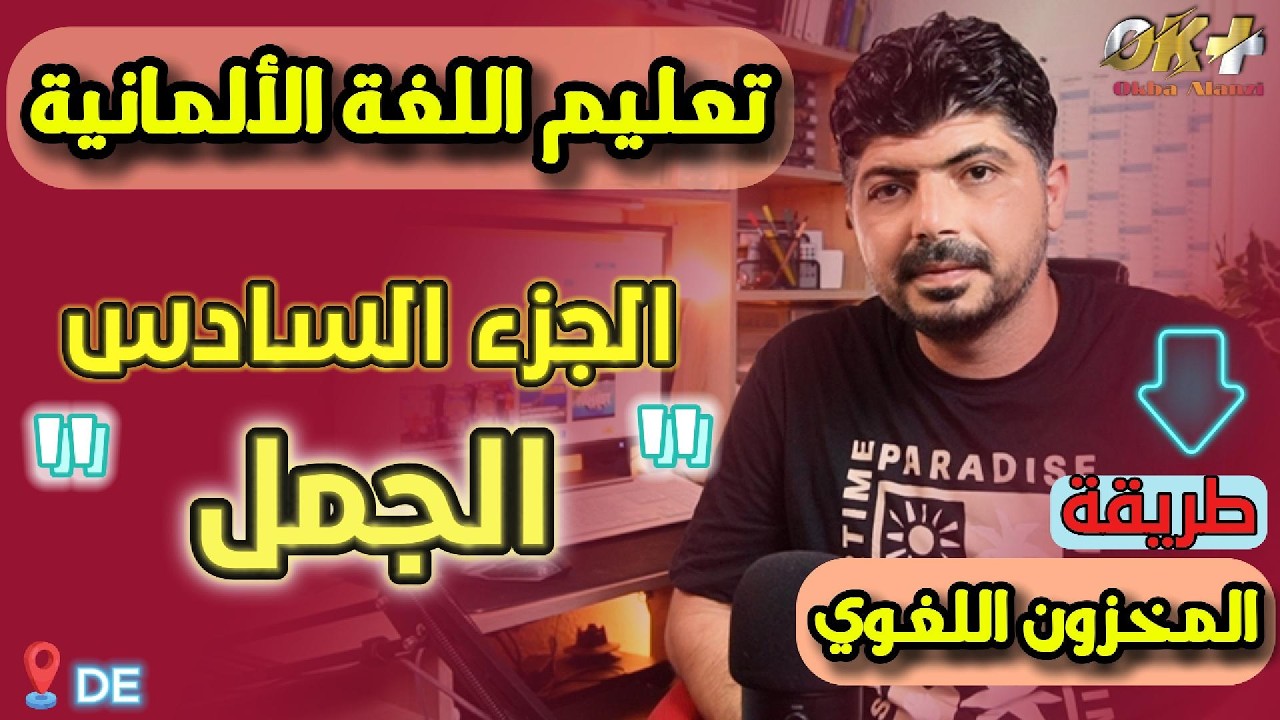
Fifty sentences for building your German vocabulary – part five
Part five changes the nature of the series: no longer single words but whole sentences to be said as they stand. A ready sentence pays off faster than a single word, because you say it in its place without stopping to assemble it.
The table on this page gathers twenty phrases of courtesy and of the shop — the first things needed once you step outside your door.
Why a store of words is built by volume, not by rule
Grammar organises what you already know; it does not produce what you do not. Someone who still cannot speak in the street after a year of study is usually short of words, not of rules. That is why this series comes in batches: fifty words at a time, heard, repeated and used, rather than analysed and explained. Anyone measuring their own progress knows that the distance between one level and the next is counted in words before it is counted in anything else.
Twenty phrases for courtesy and the shop
| Deutsch | English |
|---|---|
| Entschuldigung! | Excuse me! |
| Wie bitte? | Pardon? |
| Ich verstehe nicht. | I do not understand. |
| Können Sie das bitte wiederholen? | Could you repeat that, please? |
| Sprechen Sie bitte langsamer. | Please speak more slowly. |
| Wie heißt das auf Deutsch? | What is that called in German? |
| Können Sie mir helfen? | Can you help me? |
| Ich hätte gern … | I would like … |
| Wie viel kostet das? | How much does that cost? |
| Das ist zu teuer. | That is too expensive. |
| Ich nehme das. | I will take it. |
| Haben Sie das in einer anderen Größe? | Do you have this in another size? |
| Wo ist die Kasse? | Where is the till? |
| Kann ich mit Karte zahlen? | Can I pay by card? |
| Ich schaue nur, danke. | I am just looking, thank you. |
| Vielen Dank. | Many thanks. |
| Gern geschehen. | You are welcome. |
| Es tut mir leid. | I am sorry. |
| Kein Problem. | No problem. |
| Schönen Tag noch! | Have a nice day! |
How to fix a word so it does not slip away
- Listen to the part once through, then again while pronouncing along with it, not after it
- Split the fifty over five days, ten a day — a single large batch is forgotten whole
- Review yesterday's words before starting today's; two minutes are enough
- Write one sentence per word taken from your own life, not from a book
- Review the whole part after a week and again after a month — spacing is what moves a word into long-term memory
- Anything forgotten twice goes on a small separate list and is reviewed on its own
Frequently asked questions
Should I learn the sentence whole or take it apart?
Whole first, until it runs off the tongue; take it apart afterwards to see how it was built. The other way round slows you down.
Which phrase is worth most?
Können Sie das bitte wiederholen? — it keeps the conversation open instead of ending it at the first word you missed.
What is the difference between Entschuldigung and Es tut mir leid?
The first asks permission or attention; the second apologises for something that went wrong.
Should I use bitte a lot?
Yes. German leans heavily on bitte in requests; leaving it out turns a request into an order.
Watch the video
The video is on the OK+ channel on YouTube:
https://www.youtube.com/watch?v=cJx6P4j4Mgs
Also on OK+
- Fifty nouns for building your German vocabulary – part four
- Fifty sentences for building your German vocabulary – part six
- Learn German A1 – lesson 1
A tool that shortens the road
The OK Plus DE app gathers German administrative calculators and form templates in one place, free, ad-free, in seven languages. Android and iPhone, from the same page:
Get the OK Plus DE app
Thank you! Your feedback helps us improve.
تابع قناة OK+ على واتساب
كل جديد عن الحياة في ألمانيا: الطلبات، والقوانين، والفرص — أولاً بأوّل.